Amber Sutliff, licensed mental health counselor in the state of florida
Welcome to your first step towards reconnection
“The world will ask you who you are, and if you do not know, the world will tell you” – Carl Jung
.
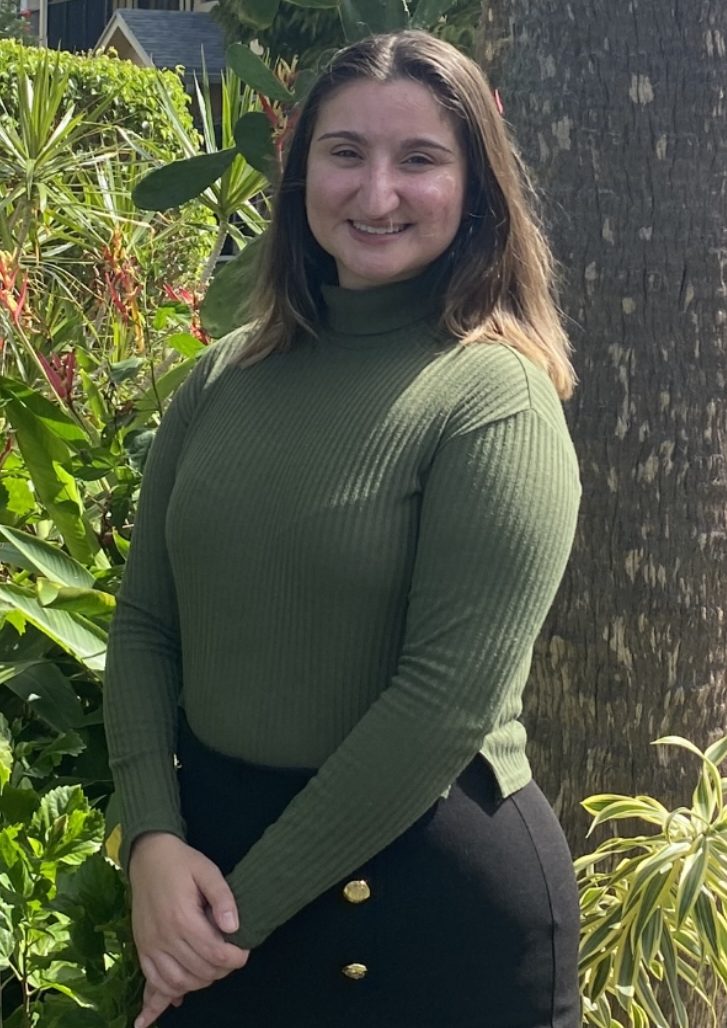

This is Mai, an expert at being in the “here and now”.
Hi there! My name is Amber and I am a Licensed Mental Health Counselor passionate about helping others reconnect with themselves.
Unfortunately, shame has steered the ship for a lot of us throughout our lives. You may have been shamed into the behaviors you’re currently trying to change. You may have even been shamed for talking about them in the past, even in therapy. I want to help you chisel away at that shame and learn to reconnect with the parts of you that you have had to shut out.
Many of us have learned to survive through a state of disconnection. Whether that has involved isolating from others, numbing your emotions, ignoring your body’s physical cues, or a general sense of “spacing out”, disconnection may have become your comfort zone.
I believe that the point of therapy is connection. And in that connection with a safe person in a safe environment, you get the opportunity to learn how to reconnect with yourself. This comes with reconnecting with other people, with your emotions, and gradually, with your own body. That idea may be terrifying right now. Maybe you have never had that sense of connection with yourself. It may not even seem possible. And I am here to help you see that possibility and live it for yourself, gradually and at your own pace, just as I have learned to do through my own work.
About me:
I am passionate about helping others reconnect with themselves and find more empowerment in their lives due to my own lived experience and my own therapeutic work that showed me I am more than my mental health challenges.
I was born and raised in south Florida and completed both my Bachelors in Psychology and my Masters in Clinical Mental Health Counseling at Florida Atlantic University.
I currently work with clients in person in Coconut Creek, FL, and offer telehealth services for clients located anywhere in the state of Florida.
When I’m not in sessions, you will find me with my husband and our dog, Mai, wishing for cold weather in the Florida sun.
Services Offered
Individual Therapy
I work with teens and adults (ages 12+) coping with eating disorders/body image distress, trauma/PTSD, depression and anxiety, codependency, self-harm behaviors and relationship/family conflict. I try my best to tailor sessions specifically to the client’s individual needs; however the work I do tends to involve experiential practices, such as psychodrama, expressive arts, somatic work, and inner child/parts work. Sessions tend to begin with psychodynamic work, which involves us exploring your past together to work towards recognizing the patterns that you had to form to survive; so we can work towards forming new, more beneficial patterns. This may also include discussing coping skills and grounding techniques to build tools together for navigating that deeper work.
Group Therapy
Individual sessions can be so incredibly powerful, but there is nothing quite like being in a room of people who relate to your pain in their own way, and truly see you. I offer group therapy for those who are wanting to connect with others who share relatability, learn how to feel safe in being vulnerable, and receive and offer support to others who are also “doing the work”.
Family Sessions
Sometimes as we are doing our own work, we realize there is work to do with our loved ones. I offer family sessions for clients who are wanting to improve their communication and learn how to set boundaries with their parents, children, or siblings.
Types of therapy offered
Quick note: This all might feel overwhelming. I want you to know we don’t dive right in head first. Therapy shouldn’t be easy, but it also shouldn’t be intolerable. Sometimes “the work” is really deep and profound. Sometimes it includes a light bulb moment that suddenly makes it all make sense. And sometimes it’s just sitting with another human letting yourself say things that have felt too difficult to say before. There are no lofty expectations. You are not being graded. Chances are, pressure and expectations are a major factor of why you’re looking into therapy in the first place. Let’s not add to that. We will discuss what feels most beneficial and tolerable when it comes to processing this stuff. We will also discuss coping skills, grounding techniques, and every day things you can do to make this less consuming. It doesn’t always have to be intense and formal. But for those moments where structure is needed, here’s the type of therapy I do:
Blending Experience and Insight
Sometimes feelings are intense and hard to explain, and words just might not do the trick in expressing them. Much of the work I do involves experiential methods, which are more action-driven methods that go further than having a conversation. This may include setting a scene, acting things out, connecting with the body, drawing/painting/working with clay, movement, writing, etc.
Though the experiential work is powerful and transformative, sometimes, talking things through is exactly what we need. We will work as a team to explore your past and understand what your past self needed. My hope is by doing this, you can begin to give that to yourself now.
We may also tackle difficult thoughts, behaviors, and feelings with skills used in Dialectical Behavioral Therapy when specific guidelines for coping feel needed.
Gestalt Therapy
Gestalt methods involve being in the here and now and honoring what comes up. Like I keep saying, you may have had to numb to survive. If that’s the case, it may not feel safe or even possible to connect with your feelings, whether physical or emotional. Methods like somatic work, psychodrama, empty chair, and expressive arts can help you learn to find safety in noticing, acknowledging, and expressing what you are feeling or were unable to express in the past. Because eating disorders and co-occurring symptoms involve disconnection from the body, learning to reconnect with yourself and process what you have been carrying also eradicates the “need” for numbing behaviors. Of course, this doesn’t happen over night. But we will work towards this goal in a way that feels tolerable at your own pace.
Parts Work
My work often comes from a parts work perspective. Many of us who have experienced very difficult things (whether we consider that trauma or not) have had to disconnect from ourselves to get through it. As we disconnect, we do things that helped us cope, whether those things were “healthy” or not. Since it worked (we got through it), we may keep doing it and it may feel automatic. As we work together we may explore these parts that were born out of particular experiences and may cause internal conflict. As we understand these parts and their roles, we can work together to help you have some more compassion for yourself and find more beneficial ways to cope and get these needs met. This may be done through Internal Family Systems and Inner Child work.
Psychodynamic Therapy
Part of reconnecting with yourself is understanding yourself. Psychodynamic therapy involves methods of exploring your past, particularly experiences in your childhood and adolescence that led to the current beliefs and patterns you feel stuck in. The point is to understand how your not-so-helpful ways of coping formed, understanding how they helped you meet your needs to survive, and work towards forming new patterns that meet your needs in a more beneficial way. I incorporate psychodynamic therapy with a trauma-informed, attachment-based lens. Our work may involve exploring early recollections, processing repressed feelings, exploring your defense mechanisms, and exploring past and present relationship dynamics. A lot of people say, “I don’t remember much” or “it’s all blurry”. That’s okay! We can still do this work. It is less about processing every specific detail of a memory and more about understanding how your present self is carrying what your past self experienced, especially in terms of the “messages” you received that formed how you interact with others (and yourself).
“ Feeling the need to be perfect does not make you perfect; it only paralyzes you. You will be fortunate if you learn to be yourself. ”
– David Sedaris
What I treat
Eating Disorders and Body Image Distress
Seeking therapy for body image distress or stress surrounding food does not require a specific weight or body size. Though someone struggling with disordered eating may often be pre-occupied with body image and appearance, they are not defined by these factors. Far too many times, I have heard the association between eating disorders and someone needing to be a specific weight, body type, gender, age, or race. Eating disorder behaviors are more often than not how someone has learned to cope with their pain. This may be through restriction (limiting food intake, counting calories, avoiding specific types of food), purging (self-induced vomiting, consistent laxative use, compulsive, excessive exercise), or binging (consistently consuming an excessive amount of food in one sitting to the point of discomfort /shame). These behaviors are done by individuals of all weight ranges, body sizes, genders, sexual orientations, races, and ages. I work with individuals ages 12 and up who fall into any of those categories.
Complex Trauma
When someone hears the word “trauma”, what may come to mind is an extreme, catastrophic event. Though this would often be an example of trauma, it is not the only way trauma occurs. Complex trauma refers to traumatic situations that have happened over an extended period of time. For many people, this begins in early childhood. Sometimes this involves things that happened to you, like neglect, abuse, or abandonment. Sometimes it may be things that you needed to happen that didn’t, like being consoled as a child when you were hurt, taken to the doctor when you were sick, or having someone to listen to you when you desperately needed to say something. The work we will do together will involve exploring these significant points in your life that we will learn formed your core beliefs. The point is not to bash anyone from your past or sink into the darkness you felt, the point is to reconnect with that part of you who experienced these moments. The hope is that by reconnecting with that part of you, you can bring yourself fully into the here and now and put down what you may not even realize you are still carrying.
Co-occuring Conditions
In addition to eating disorders and unresolved trauma, I also help clients work through body dysmorphia, codependency, depression, anxiety, intrusive thoughts, obsessions/compulsions, relationship distress/avoidance, family conflict, and self-harm behaviors. These behaviors are often additional ways that someone numbs themself and copes with unresolved pain from their past. Toxic shame often leads to these behaviors, and these behaviors are often followed by shame. Because of this, you may be stuck in a cycle of repeating the behavior and isolating from support. I work with individuals who are noticing they are stuck in these patterns and wanting to learn how to form new, more beneficial ones.
Billing and Insurance
I am in network with
Cigna
Aetna
Carelon Behavioral Health
Quest Behavioral Health
Blue Cross Blue Shield
Ascension (SmartHealth)
Florida Blue
For out of network fees:
Individual therapy sessions out of pocket: $165 per hour
Family sessions out of pocket: $175 per hour
If I am not in network with your insurance, I am happy to provide a superbill. I am also happy to discuss sliding scale options.
Connect with me
I offer free 25 minute consultations. Please reach out if you’d like to schedule a call to chat and see if it feels like a good fit.
 Amber Sutliff, LMHC